
Starting Over in Your 50s? You’re Not Behind. You’re In Between.
I just turned 56. I have a great marriage, a family I’m proud of, and grandkids who run at me screaming “GiGi!” every time I walk in the door. By most measures, I’m a success.
And still, there’s a voice that likes to show up around birthdays.
“Maybe you waited too long for some of the big things still on your list.”
I hear that same voice from women in their 50s all the time. Their career shifted. Maybe they moved. The kids are grown and out of the house, and the friends who used to live down the street are now scattered across three time zones.
They tell me they feel stuck between two lives:
- The one they had and were comfortable in, and
- The one they haven’t built yet.
The future hangs out there like a big, vague promise. With a deadline that seems to show up faster every year.
If that’s you, I want to hand you a different way to read where you are right now.
Feeling like your best years are behind you is a feeling. It isn’t a fact.
It’s a powerful feeling, though. Midlife stacks a whole bunch of changes on top of each other at the same time. Your body changes. The roles that defined you so easily for twenty years shift while you weren’t looking. You turn around one day and think, holy cow, how did I get here so fast?
Then your brain, always so delightful about reminding you what you are not, fills the gap with a story.
“It may be too late for me.”
That story matters more than most people think.
Becca Levy and her colleagues at Yale studied 660 adults age 50 and older and tracked them for up to 23 years. The people who held more positive views of their own aging lived about 7.5 years longer than the people who held more negative ones (Levy et al., 2002).
That advantage held up even after the researchers accounted for age, gender, socioeconomic status, loneliness, and functional health. Part of the difference ran through what the researchers called the will to live.
Seven and a half years! You can do a lot of things with seven and a half years.
The authors point out that’s a bigger gain than other studies have linked to low blood pressure, low cholesterol, not smoking, or regular exercise.
So the story you tell yourself about this decade shapes how you actually live it. Which means it’s worth telling a better one.
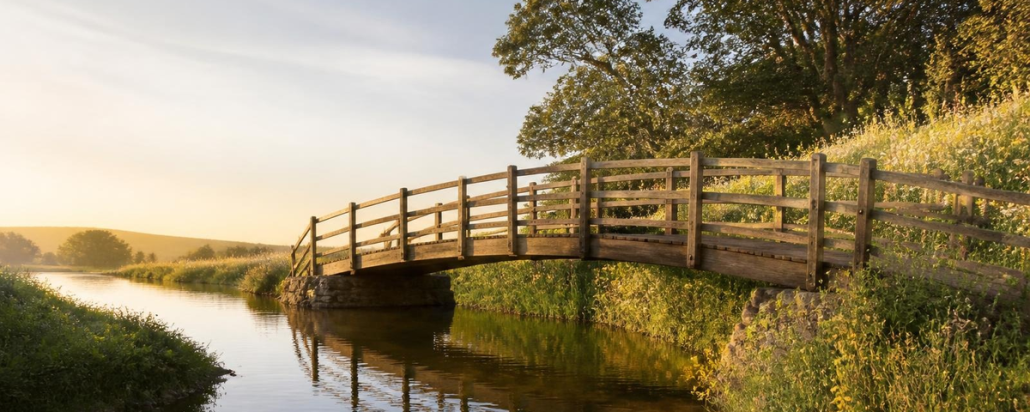
You’re in the squishy part before the new chapter has a name.
William Bridges spent his career studying how people move through big life changes. He found that a transition doesn’t jump straight from an ending to a beginning.
There’s a middle stretch he called the neutral zone: the in-between time when the old is gone but the new isn’t fully up and running yet (Bridges & Bridges, 2019; William Bridges Associates, n.d.).
It can feel disorienting in that space. You may feel flat or confused and wonder if you’re doing life wrong. That’s normal for this stage. Bridges described the neutral zone as the seedbed for new beginnings. It’s where the new direction actually takes shape.
Here’s what I see go sideways most often, especially with women.
Some grab the first new thing that comes along just to get out of the discomfort and uncertainty. After all you’ve been through and achieved, it’s hard to give yourself the grace to feel like a beginner or to not know exactly what to do.
It’s a trap that can see you make decisions you can’t easily take back. This is true in relationships, jobs, where you live, and what you decide to commit to.
Others try to rebuild the old life exactly the way it was. If what I was doing before worked then, maybe I just need more willpower to make it happen now. And then you shame yourself for not being able to get it right.
Shame is also a trap that can see you make decisions you can’t easily take back.
This in-between you’re in isn’t the end of the old life. You’re in the squishy part right before you find a name for this new chapter.
You don’t get to skip it. But you do get to use it.
Everything you’ve done so far was building toward this.
Your 20s were for learning. (I would not go back to my 20s, thank you very much.)
Your 30s and 40s were for building. They gave you a track record, whether or not anyone handed you a trophy for it.
Your 50s are where the real work starts. This is the decade you get to pull together everything you’ve learned into something that’s actually yours.
You walk into it armed with experience, a much, much lower tolerance for nonsense, and a keen sense of what it takes to do something meaningful.
The research backs this up in a few surprising places.
When psychologists Joshua Hartshorne and Laura Germine tested nearly 50,000 people on a range of mental skills, they found that our abilities don’t all peak at the same time. Raw processing speed peaked around age 18 or 19.
But the ability to read other people’s emotions held at its peak from about 40 to 60. And vocabulary, a measure of everything you’ve accumulated over the years, kept climbing into the late 60s or early 70s in their online data (Hartshorne & Germine, 2015).
And if your next chapter involves building something, the economists have good news for you (a nice change these days). A team using U.S. Census Bureau data studied the founders of the fastest-growing new businesses in the country. The average founder age for the top 1 in 1,000 firms was 45.
Among people who started a company, a 50-year-old founder was 1.8 times more likely than a 30-year-old to build one of those top-growth firms. Prior experience in the industry was one of the strongest predictors of success (Azoulay et al., 2020).
Your experience counts. The data treats it as an advantage, and so should you.
It’s hard not to grieve the losses or wonder about the opportunities you think you missed. Let yourself feel that for a minute.
Then notice that everything you’ve done so far — in your career, your family life, and your community — is exactly what brought you here, uniquely equipped for what’s next.
That’s an undeniable antidote to the “too late” narrative.
The way through “too late” is to make something.
Here’s what I do with my own nagging voice: I don’t argue with it. I give it something to look at.
For me, that means doing something, anything, that creates a tangible thing or sets a wheel in motion toward what I want.
- Writing books
- Making videos
- Sharing what I’ve learned so other people can connect with what they want
If I sit around trying to keep time from passing before I start a new chapter, I’ll miss the chance to make something interesting happen right now.
You don’t need to figure out your whole next chapter this week. You need a first move.
1. Pick one thing and give it 20 minutes this week.
Twenty minutes, once, this week. Don’t make the assignment bigger than that. Maybe it’s something you’ve been curious about your whole life but were afraid to try. A basket weaving class, a small sketchbook, a short run in your neighborhood, a coffee with someone who does the work you’ve always wondered about. Put it on the calendar like a doctor’s appointment.
2. Explore in small, ordinary steps.
Don’t go crazy. You’re collecting information, and each small step tells you something. Take another step in that direction, or try a different door altogether. The best thing about the neutral zone is that it’s neutral. It’s built for exploring, so explore.
3. Change the sentence you say about your age.
What you believe about getting older shapes how you live it, so catch “it’s too late for me” when it shows up. Swap it for something that’s both true and useful: “I have decades of experience, and I still have plenty of runway.”
4. Let someone younger watch you do it.
The women in their 30s and 40s around you are paying attention to how you handle this decade, whether you realize it or not. When they see you start something new at 52 or 56 or 63, they learn that what’s coming for them is handleable. That’s legacy you get to build in real time.
You’re not behind. You’re in between.
And between is always where the next chapter starts.
Your 50s are where everything you’ve learned finally has somewhere to go. Don’t fret about them. You’re about to make something amazing.
Pick your 20 minutes and put it on the calendar today.
I talk through this in my latest video, Starting Over in Your 50s? Your Best Years Aren’t Behind You. If it helps you take that first step, watch it below.
And if you want more on getting unstuck and building what’s next, subscribe to my YouTube channel.
References
Azoulay, P., Jones, B. F., Kim, J. D., & Miranda, J. (2020). Age and high-growth entrepreneurship. American Economic Review: Insights, 2(1), 65–82. https://doi.org/10.1257/aeri.20180582
Bridges, W., & Bridges, S. (2019). Transitions: Making sense of life’s changes (40th anniversary ed.). Balance. https://www.hachettebookgroup.com/titles/william-bridges/transitions-40th-anniversary-edition/9780738285405/
Hartshorne, J. K., & Germine, L. T. (2015). When does cognitive functioning peak? The asynchronous rise and fall of different cognitive abilities across the life span. Psychological Science, 26(4), 433–443. https://doi.org/10.1177/0956797614567339
Levy, B. R., Slade, M. D., Kunkel, S. R., & Kasl, S. V. (2002). Longevity increased by positive self-perceptions of aging. Journal of Personality and Social Psychology, 83(2), 261–270. https://doi.org/10.1037/0022-3514.83.2.261
William Bridges Associates. (n.d.). Bridges transition model. https://wmbridges.com/about/what-is-transition/

Leave a Reply
Want to join the discussion?Feel free to contribute!